The Nazar: History, Meaning, and Protection Across Cultures
Ancient Origins
The belief in the “evil eye” — the idea that an envious or admiring glance can transmit misfortune, illness, or harm to its target — is one of the oldest recorded superstitions in human history. Its earliest traces appear in Mesopotamia: archaeologists have uncovered eye-shaped stone and alabaster idols at Tell Brak, an ancient city in modern-day Syria, dating back to roughly 3300 BCE, and Sumerian and Babylonian cuneiform tablets from around 3000 BCE describe the evil eye as a malevolent force tied directly to envy. These early eye-carvings are considered the conceptual ancestors of the amulet we now call the Nazar.
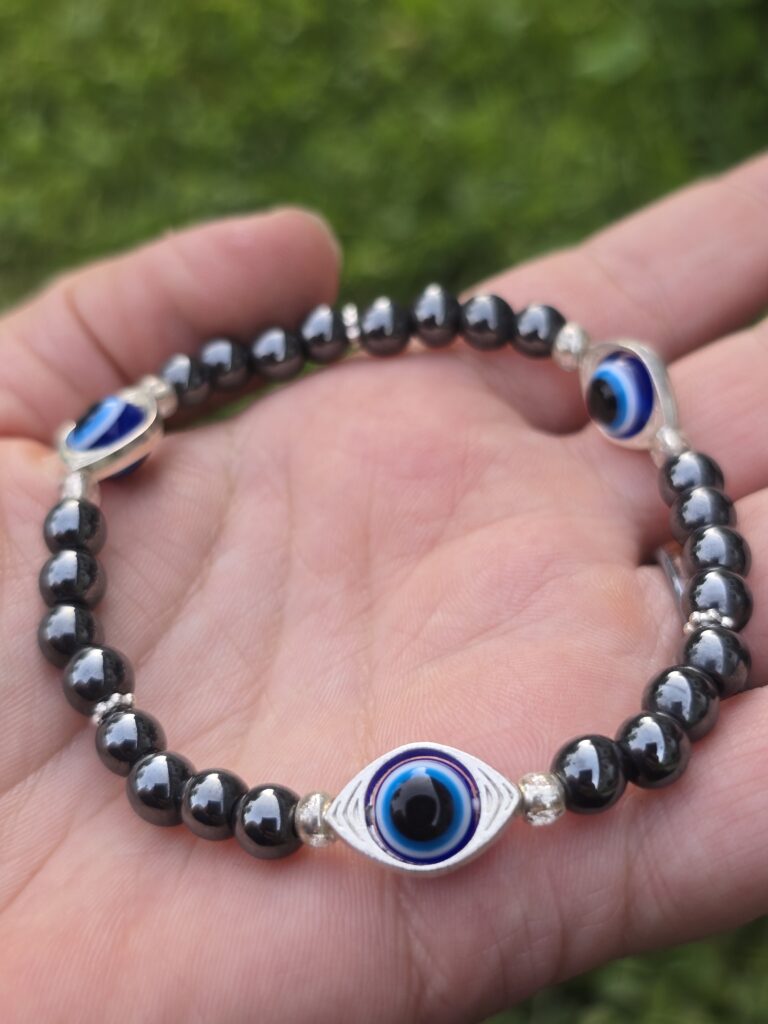
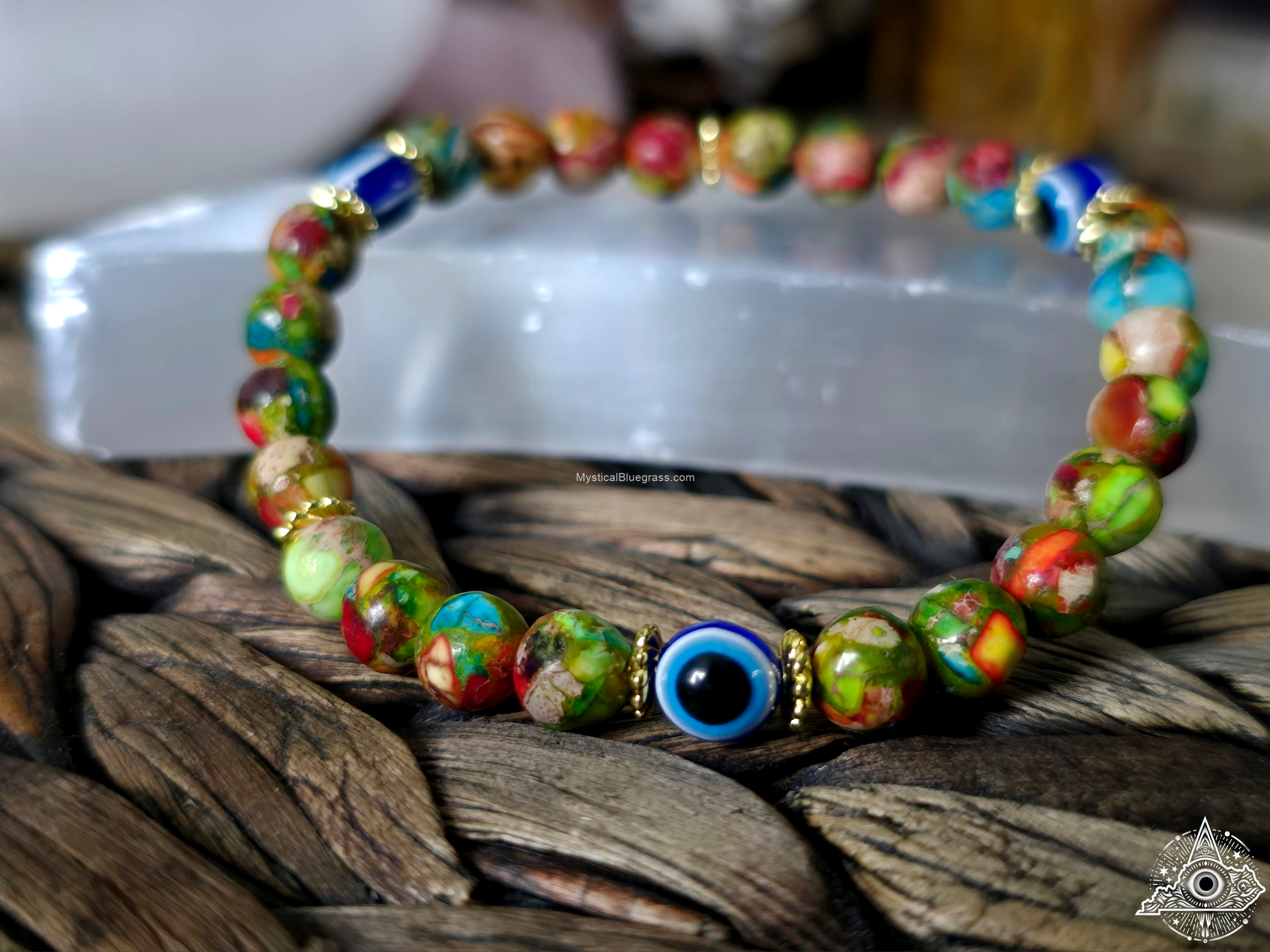
The word “nazar” itself comes from Arabic, meaning “sight” or “gaze,” and by extension refers to the harmful look itself rather than only the charm used against it. The recognizable glass-bead form of the amulet — concentric rings of white, light blue, and dark blue circling a black “pupil” — developed later, closely tied to the spread of glassmaking technology from Mesopotamia and ancient Egypt into the wider Mediterranean world. Surviving glass beads and written references to them date back to at least the 16th century BCE, with the craft eventually taking firm root in Anatolia, in what is now Turkey, where the amulet became known as the nazar boncuğu, or “evil eye bead.”
Religious and Cultural Traditions
Belief in the evil eye — and in symbols meant to guard against it — was not confined to a single culture or faith. It appears independently, and often in strikingly similar form, across several of the ancient world’s major religious and cultural traditions:
Ancient Egyptian religion associated protective power with the color blue and with the image of the eye more broadly, as seen in the Eye of Horus (wedjat), a separate but related protective symbol used on amulets, jewelry, and coffins to guard the wearer, living or dead, from harm.
Ancient Greek religion and philosophy treated the evil eye, known as baskania or mati, as a serious concern discussed by writers such as Plutarch, who offered an early theory that the eye physically emitted rays capable of causing harm, and Heliodorus of Emesa, who wrote of envy poisoning the air around the envious person. Some scholars also connect the amulet’s eye imagery to the Greek myth of Medusa, whose severed, still-potent gaze was carved onto temples, shields, and buildings as a ward against evil throughout the Hellenistic world.
Judaism developed its own robust tradition around the evil eye, known in Hebrew as ayin hara. References to it appear throughout the Talmud, which cautions against openly displaying wealth, success, or good fortune specifically to avoid provoking envious harm, and the concept remains embedded in everyday Yiddish and Hebrew expressions used to ward off bad luck to this day.
Islam explicitly affirms the reality of the evil eye, referred to as al-‘ayn, in both the Qur’an and Hadith. The Qur’an’s Surah Al-Falaq calls on believers to seek refuge from the harm of an envier’s envy, and a hadith recorded in Sahih Muslim describes the evil eye as a genuine force capable of affecting a person’s fate. Traditional Islamic protection centers on prayer, recitation of specific Qur’anic verses, and the practice of saying “mashallah” when admiring someone’s blessings, though physical amulets such as the Nazar are also widely used in folk practice throughout the Muslim world, frequently paired with Arabic calligraphy or Qur’anic inscriptions.
Hinduism, particularly across India, Pakistan, and Bangladesh, holds a parallel belief known as buri nazar or drishti. Protective practices include applying a small kohl mark to an infant’s forehead or cheek and hanging lemon-and-chili talismans, alongside eye-shaped charms similar to the Nazar, to protect homes, children, and businesses from envious glances.
Eastern Orthodox Christian communities across Greece, Cyprus, and the broader Mediterranean have long incorporated the Nazar and mati into everyday folk practice — hung in homes, pinned to infants’ clothing, and blessed alongside baptismal and holy water rites — even though the amulet itself has no basis in official Church doctrine and has at times been discouraged by clergy as a folk superstition existing alongside, rather than sanctioned by, Christian teaching.
Taken together, these independent but overlapping traditions show that the fear of the envious gaze — and the impulse to guard against it with a watching eye of one’s own — was not the invention of any single culture, but a belief that emerged repeatedly across the ancient world’s major civilizations and religions.
The Turkish Nazar Boncuğu
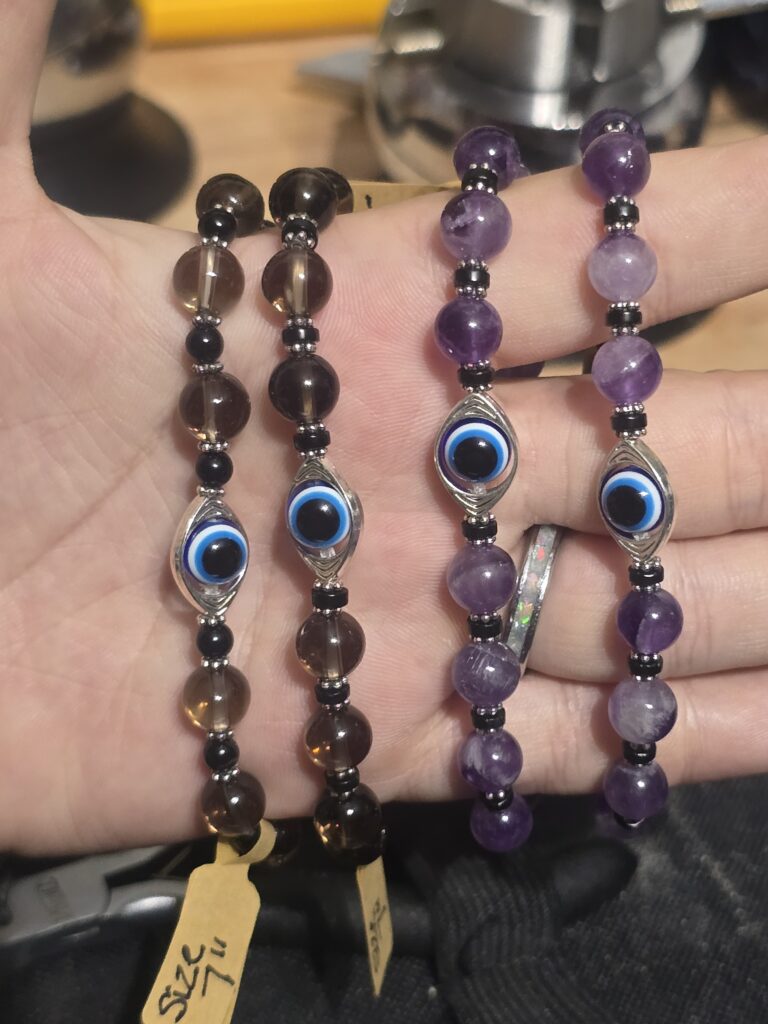
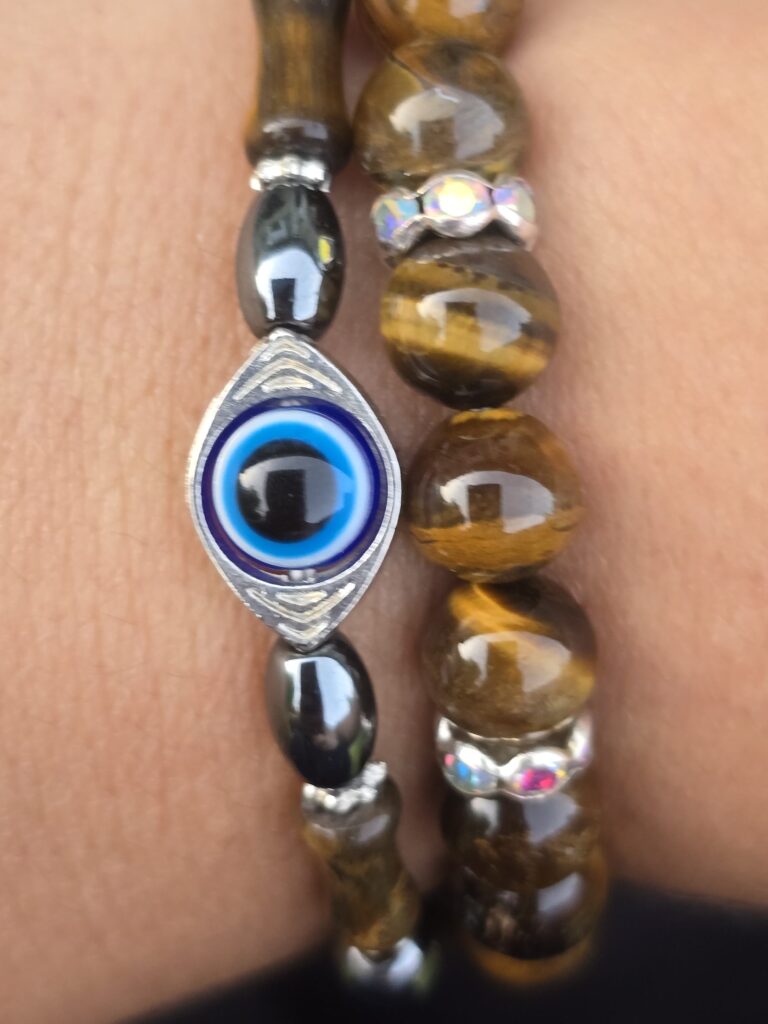
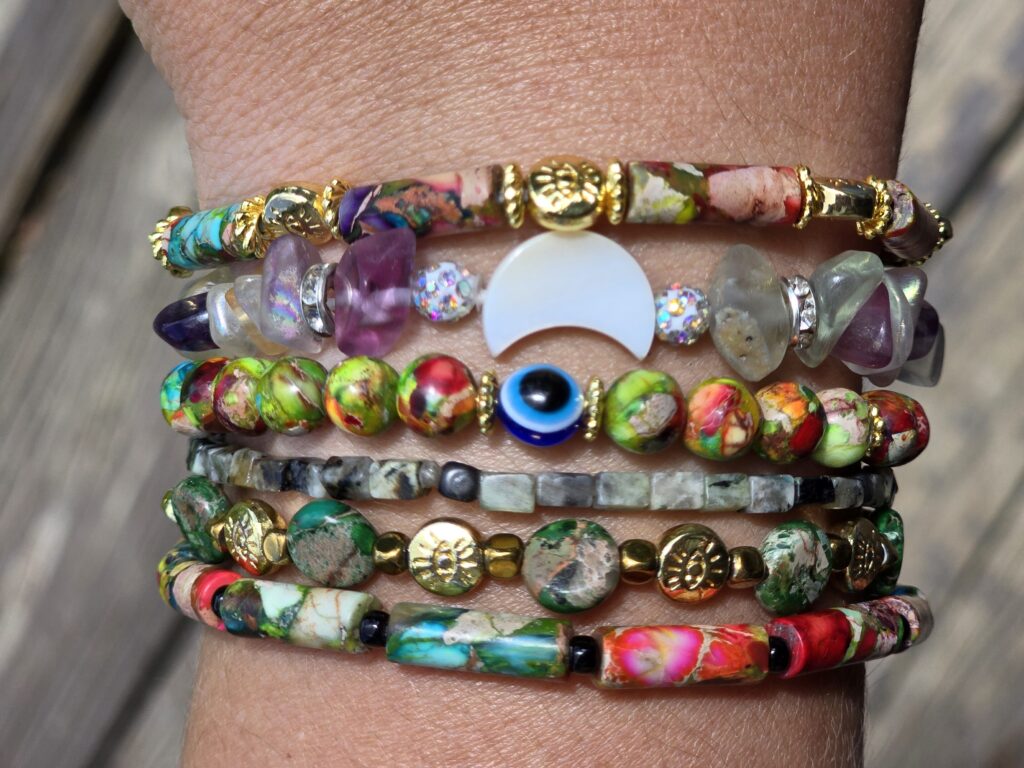
While the underlying belief in the evil eye is ancient and widespread, the specific glass-bead amulet most people picture today — with its deep blue field and white-and-black eye at the center — became most closely associated with Turkey, where it’s known as the nazar boncuğu. Traditionally handcrafted by molten glass artisans, the bead’s blue color and layered circles were shaped by centuries of Anatolian glassmaking tradition inherited from earlier Mesopotamian and Egyptian craftsmen. In Turkish folk custom, the Nazar is believed to absorb harmful energy directed at its wearer; when a Nazar cracks or shatters, it’s traditionally taken as a sign that it has done its job and successfully intercepted a curse, at which point it’s replaced with a new one. The amulet is hung in homes and vehicles, pinned to the clothing of infants, tied to livestock, and worn as jewelry, a practice that spread from Turkey throughout the broader Mediterranean and Middle East, including Greece, Cyprus, Iran, Iraq, and the Levant, each region developing its own name and small variations on the design.
Gemstone Connections
The Nazar’s traditional blue coloring places it in close symbolic company with several protective gemstones long associated with spiritual insight and defense against envy:
- Lapis Lazuli — Mined and revered since antiquity in Mesopotamia and ancient Egypt, where it was ground into pigment and carved into amulets. It was believed to sharpen awareness and shield the wearer from negative influence, much like the Nazar itself.
- Sapphire — Long associated with divine favor and protection, historically set into talismans and religious objects meant to guard against envy, harm, and misfortune.
- Turquoise — Considered sacred across numerous cultures, from ancient Persia to the Americas, and traditionally believed to absorb negative energy directed at its wearer while inviting good fortune in its place.
The Nazar’s glass composition also echoes older beliefs about the protective power of fired and molten materials — a lineage that connects it distantly to obsidian, the naturally occurring volcanic glass long used in scrying mirrors and protective talismans for spiritual defense and divination in cultures from Mesoamerica to the ancient Mediterranean.
Nazar Colors and Their Meanings
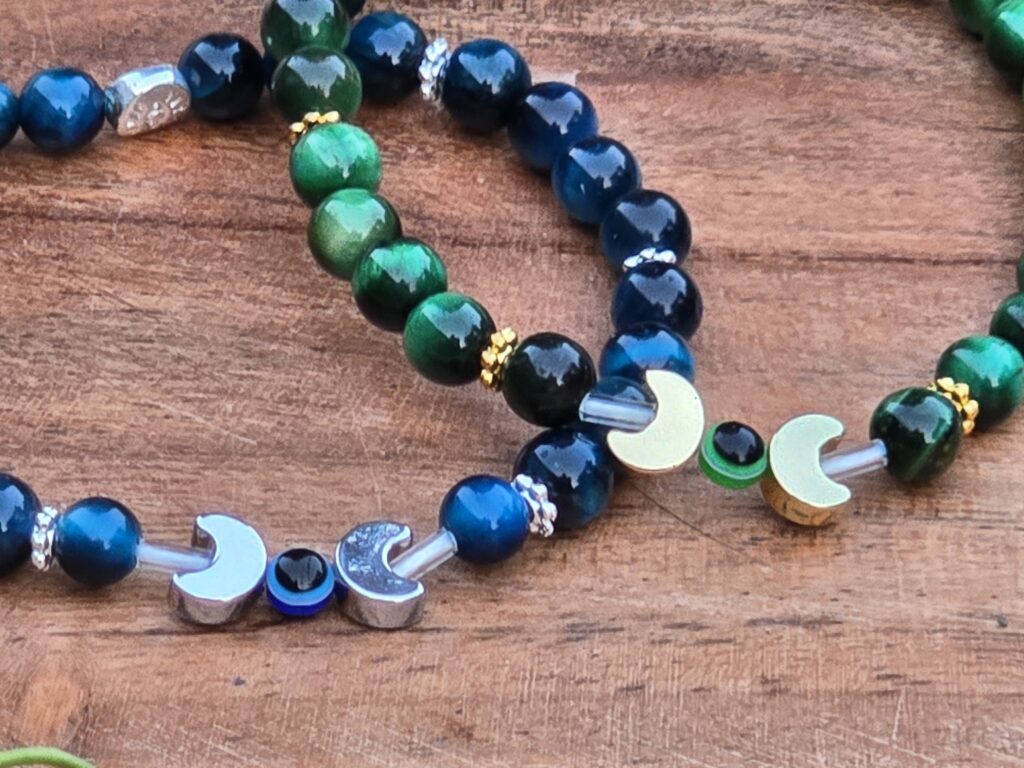
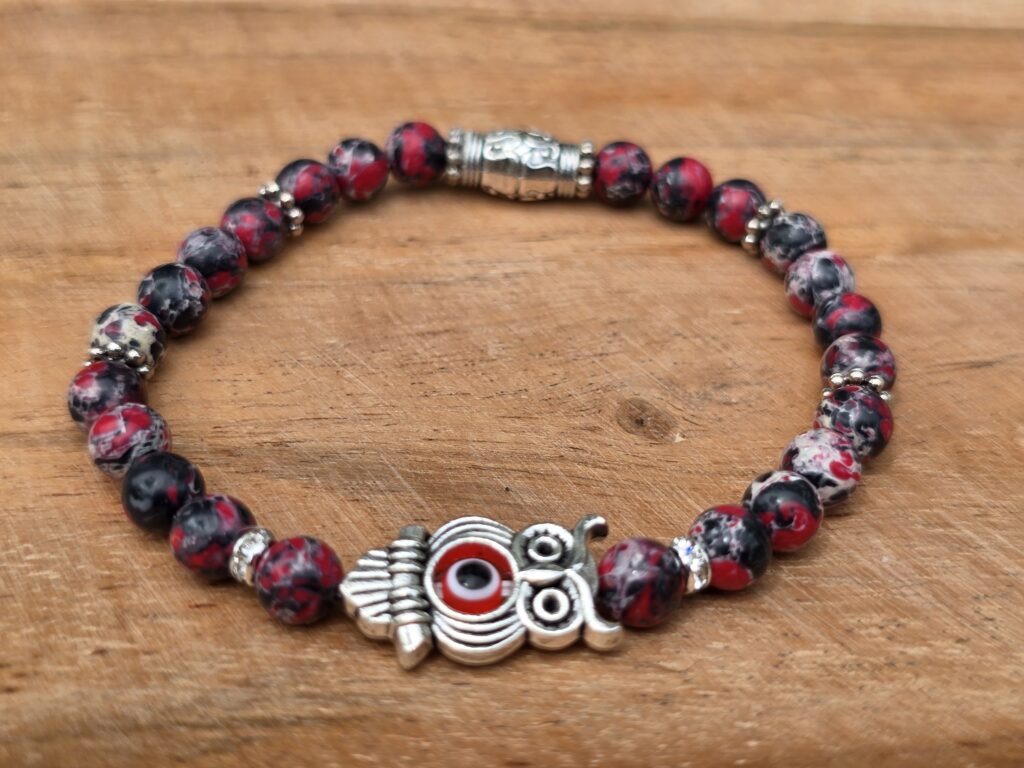
Blue remains the most traditional and widely recognized color for the Nazar, tied historically to protection, wisdom, and spiritual awareness. Over time, artisans and practitioners have expanded the amulet’s palette, with each color believed to carry its own distinct intention:
- Red — Energy, passion, and courage; believed to boost motivation and shield against negativity.
- Yellow — Happiness, clarity, and focus; associated with mental strength and optimism.
- Green — Growth, prosperity, and balance; thought to bring harmony and renewal.
- Orange — Creativity, enthusiasm, and playfulness; used to inspire joy and motivation.
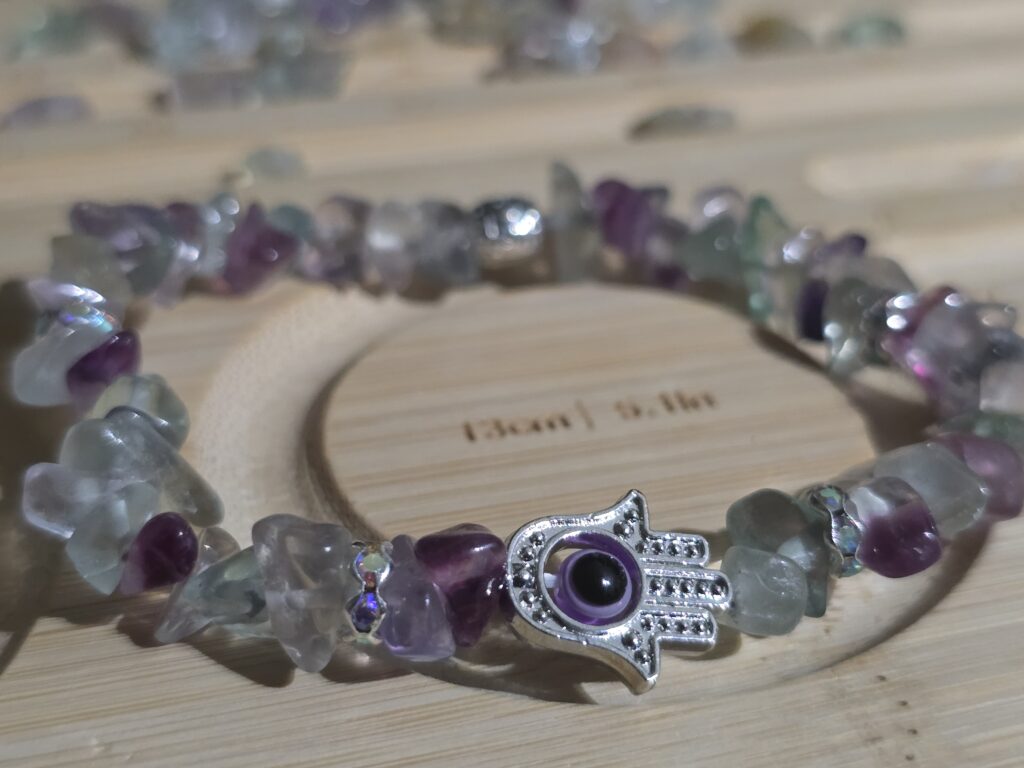
- Purple — Spiritual insight, wisdom, and transformation; believed to enhance intuition and inner strength.
- White — Purity, peace, and new beginnings; thought to cleanse negative energy and promote clarity.
- Black — A powerful shield against negative forces and bad luck; used for deep protection and grounding.
These color variations allow the Nazar to be personalized, letting the wearer choose an amulet that reflects both the ancient protective tradition it descends from and the specific intention they want to carry with them.